

Quick answer
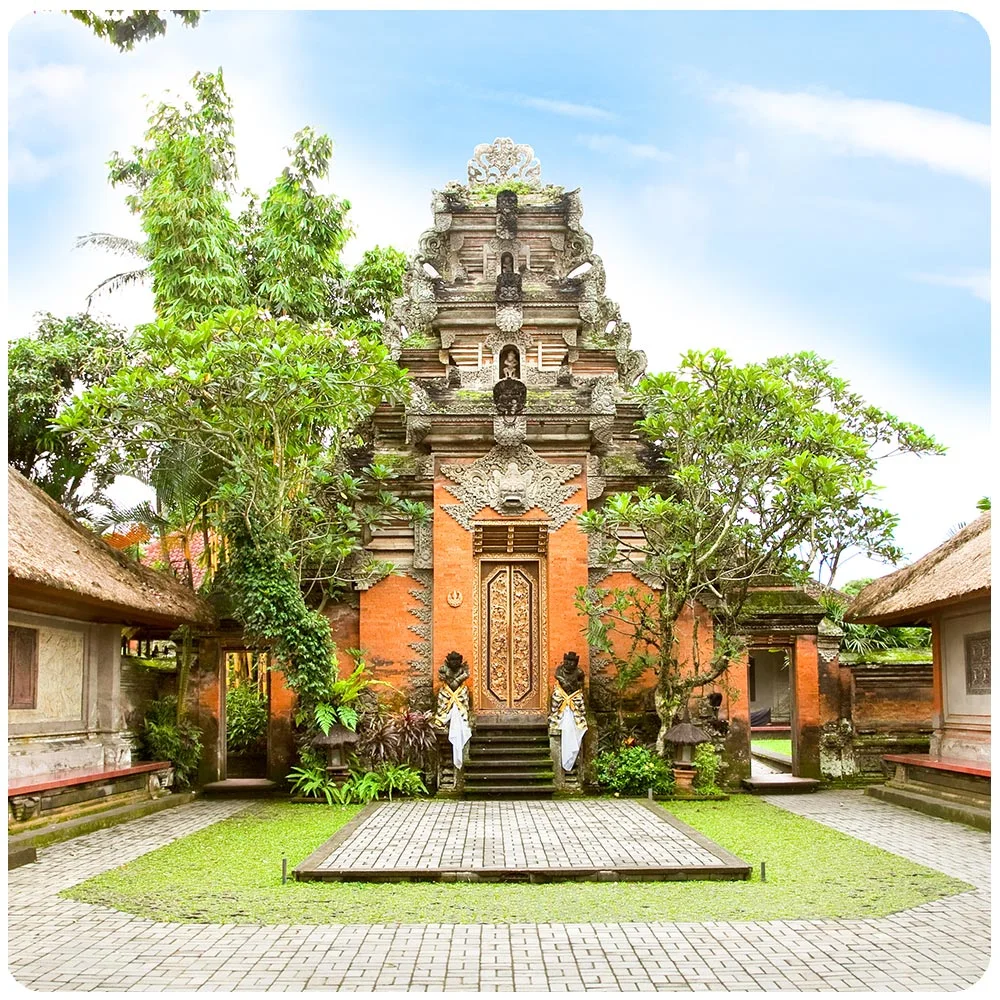
Yes, Ubud Palace is worth visiting—especially because entry is free and the grounds are open daily from 08:00 to 18:00. The compound's traditional Balinese pavilions, intricate stone carvings, and evening dance performances offer a concentrated look at royal architecture without the cost or crowds of larger temple complexes. Arrive between 08:00 and 10:00 to see the courtyards in morning light before tour groups fill the central plaza.
The palace grounds occupy less than half a hectare, yet every corner holds examples of pre-war Balinese craftsmanship rarely seen outside museum collections. Stone guardians flank each gateway, carved in the 1920s from volcanic tuff quarried near Mount Batur. The main pavilion's teakwood columns bear floral motifs that took artisans six months to complete, and the raised sleeping quarters—still occupied by descendants of the Ubud royal family—demonstrate how tropical climate shaped residential design across the archipelago. Visiting Ubud becomes more rewarding when you understand what the palace represents within the town's layout. Ubud developed as a seat of patronage for painters, dancers, and metalworkers, and the palace functioned as both residence and cultural treasury. The open-air stages you see today were built for legong and barong performances that drew anthropologists and composers to central Bali in the early 20th century. Walking the perimeter takes twelve minutes, but the spatial logic—how courtyards separate public ceremony from private family life—reveals itself only when you trace the axis from the outer gate to the innermost shrine. The value proposition is straightforward: no entrance fee, no advance reservation, and a location that places you within walking distance of Ubud's art market, rice terrace trails, and cafe district. The palace doesn't offer guided interpretation, and signage is minimal, so your experience depends on arriving when natural light favors the stonework and when foot traffic allows you to study the details without obstruction. Evening performances bring amplified gamelan and stage lighting, transforming the central courtyard into a ticketed venue separate from daytime access. Ubud Palace anchors a district that rewards slow exploration rather than checklist tourism. If your Bali itinerary includes time in the central highlands, the palace offers a free, compact introduction to the aesthetic principles that govern temple layout, residential compounds, and performance spaces across the island. The craftsmanship is genuine, the setting is historically coherent, and the lack of an admission barrier means the decision to visit carries no financial risk—only the question of whether traditional architecture and cultural context align with what you came to Bali to see.
“The compound's teakwood pavilions and volcanic stone carvings represent pre-war Balinese craftsmanship rarely accessible outside museum collections.”
Why Timing Matters: Is Ubud Worth Visiting During Peak Hours?
The best arrival window is 08:00–10:00, allowing visitors to experience the palace grounds in cooler morning temperatures while avoiding mid-day crowds. Planning your visit early ensures a quieter environment before tour buses arrive.
Dry Season (April–October)
Moderate to highSunny and warm (26°C–28°C)
These months offer the most reliable weather for walking the grounds.
Wet Season (November–March)
ModerateHumid with rain (27°C–30°C)
Expect frequent short showers, though visitor numbers may be lower.
Weekday Mornings
Minimal—
This is the optimal time to photograph the architecture without obstructions.
Verdict: The best time to visit is during the dry season months of April or October, arriving strictly between 08:00 and 10:00 on a weekday.
Entrance Fees and Is Ubud Worth Visiting for Budget Travelers?
Ubud Palace serves as a central cultural landmark in Bali, maintaining an accessible entry policy for all visitors. The palace grounds are open to the public without an admission charge, allowing travelers to experience its historical architecture at no cost.
A typical adult pays 0 IDR for entry, as the palace grounds remain free for public exploration.
Operating Schedule: Is Ubud Worth Visiting Today?
Ubud Palace maintains a consistent operating schedule throughout the week to accommodate visitors. The grounds are open daily to the public.
| Monday | 08:00–18:00 | |
|---|---|---|
| Tuesday | 08:00–18:00 | |
| Wednesday | 08:00–18:00 | |
| Thursday | 08:00–18:00 | |
| Friday | 08:00–18:00 | |
| Saturday | 08:00–18:00 | |
| Sunday | 08:00–18:00 |
Ubud Palace Architecture: Is Ubud Worth Visiting for the Design?
Ubud Palace serves as a primary example of Balinese royal architecture, characterized by intricate stone carvings and traditional courtyard layouts. Exploring the grounds allows visitors to observe the structural principles of local palace design without the complexity of modern reconstructions.

Puri Saren Agung Gates
The entrance features ornate split gates known as Candi Bentar, demonstrating refined stone craftsmanship. Observe the symmetrical carvings that flank the main passage.
Look for the detailed floral motifs on the gate pillars.
Inner Courtyard
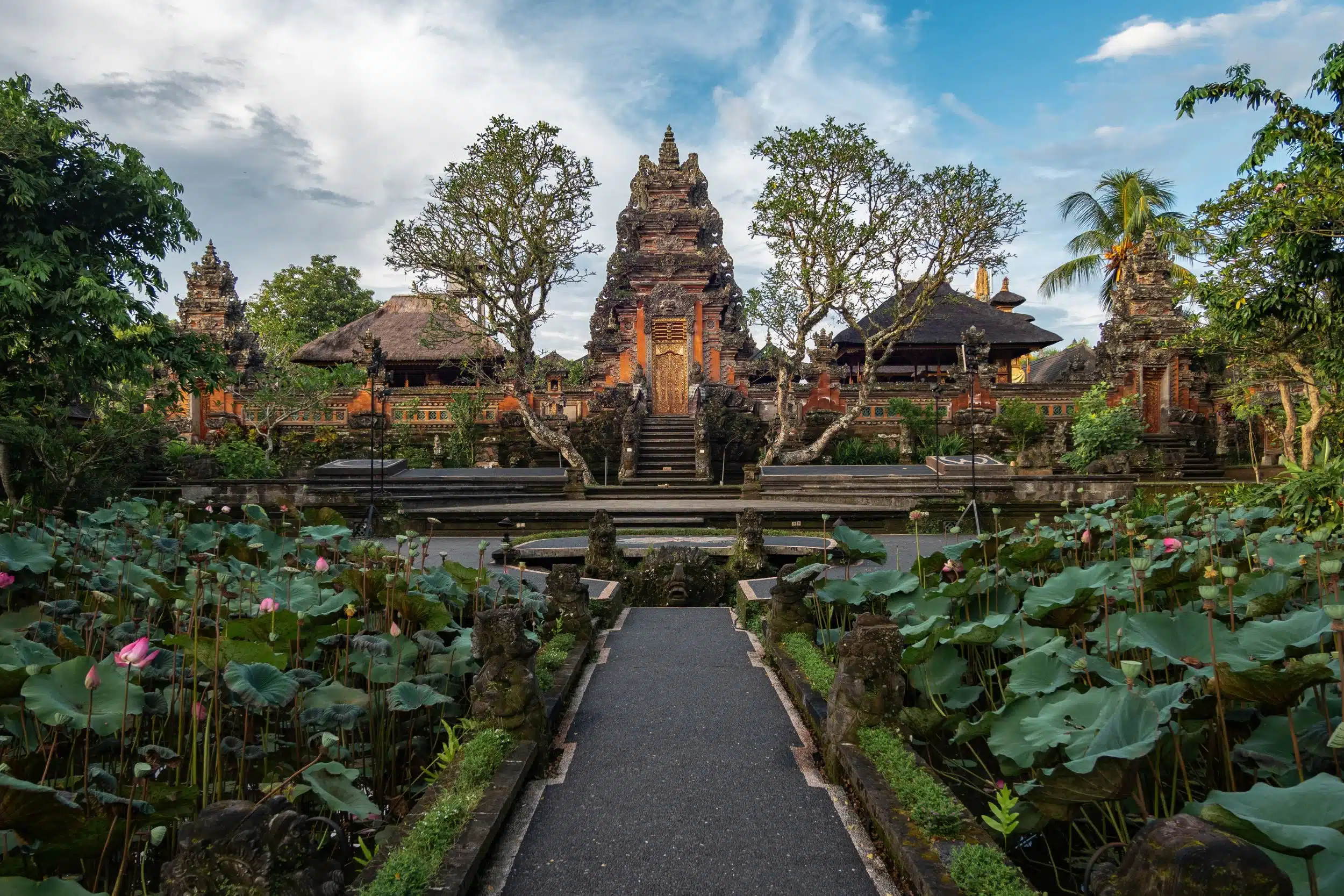
This central space connects various pavilions and serves as the heart of the palace layout. The area follows traditional Balinese open-air design principles.
Walk toward the center to capture the scale of the surrounding structures.
Traditional Wantilan
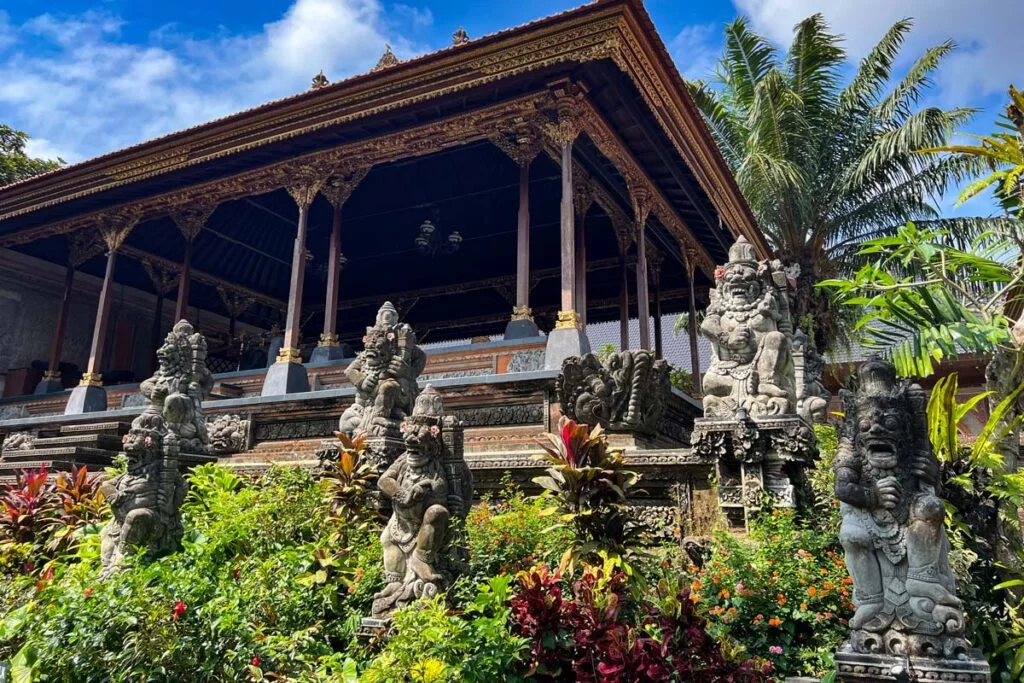
The Wantilan is a large, open-walled pavilion used for community gatherings and performances. Its raised wooden platform and tiled roof reflect regional construction techniques.
View the intricate roof supports from the perimeter of the hall.
Stone Statues and Reliefs
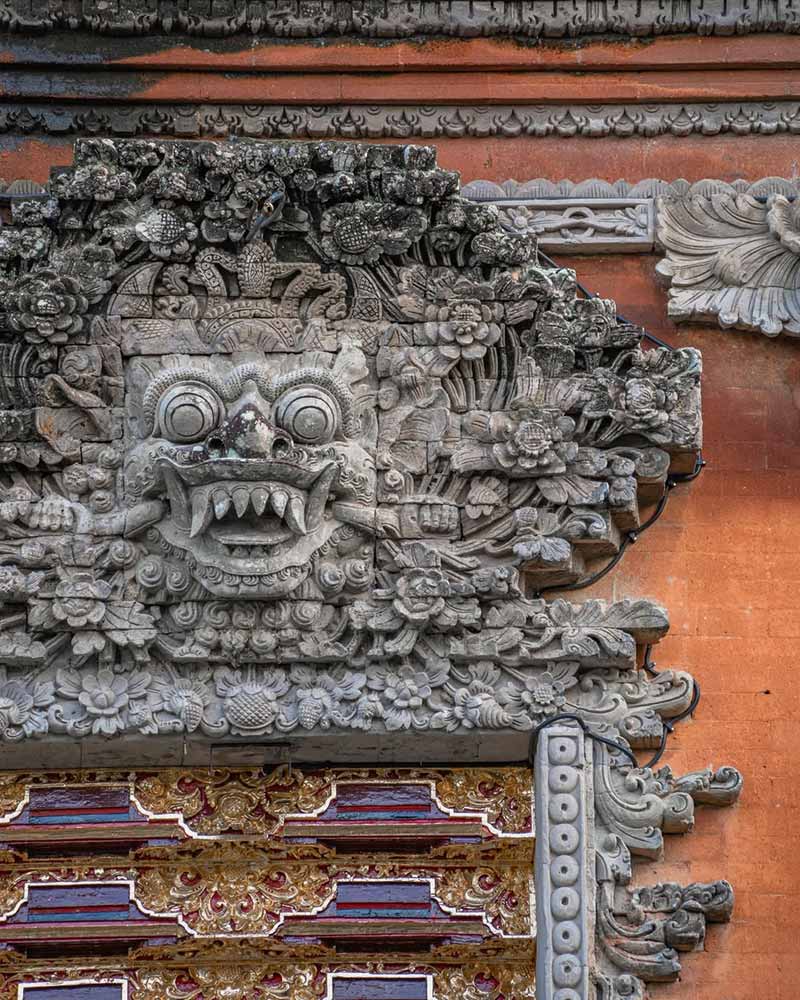
Scattered throughout the complex are numerous guardian statues and mythological stone reliefs. These works depict figures from Balinese folklore and spiritual tradition.
Examine the weathered stone textures to identify specific mythological figures.
Combining Your Trip: Is Ubud Worth Visiting Beyond the Palace?
Ubud Palace is centrally located, making it a logical starting point for exploring the cultural heart of the town. These nearby sites allow for a cohesive itinerary that combines royal history with local markets and traditional arts.
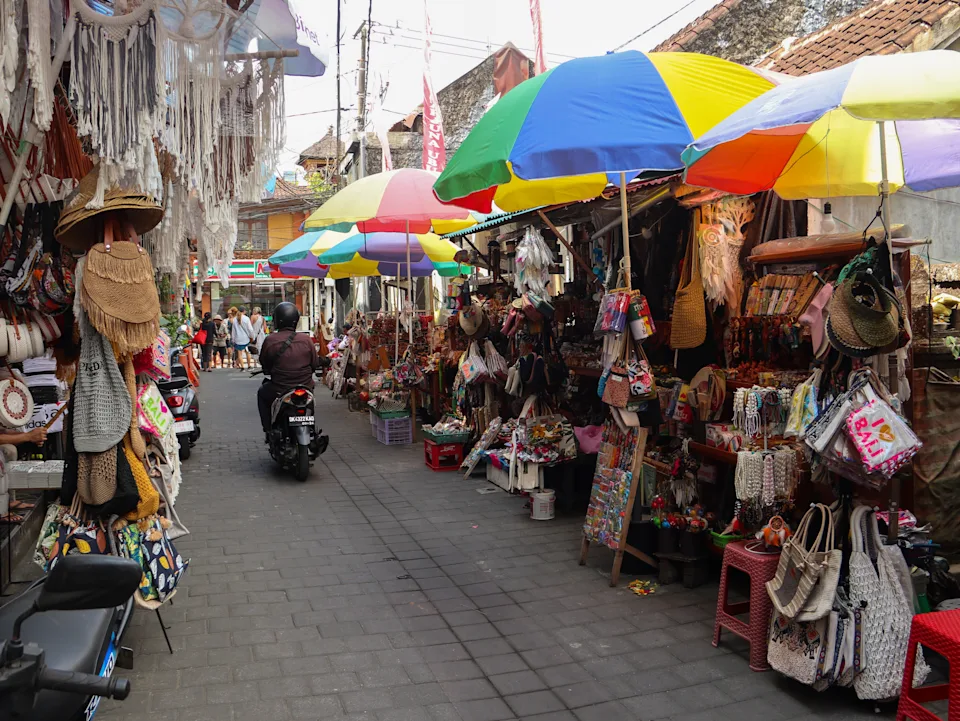
Ubud Art Market
Located directly across from the palace, this market complements your visit by showcasing local handicrafts and textiles in a traditional setting.
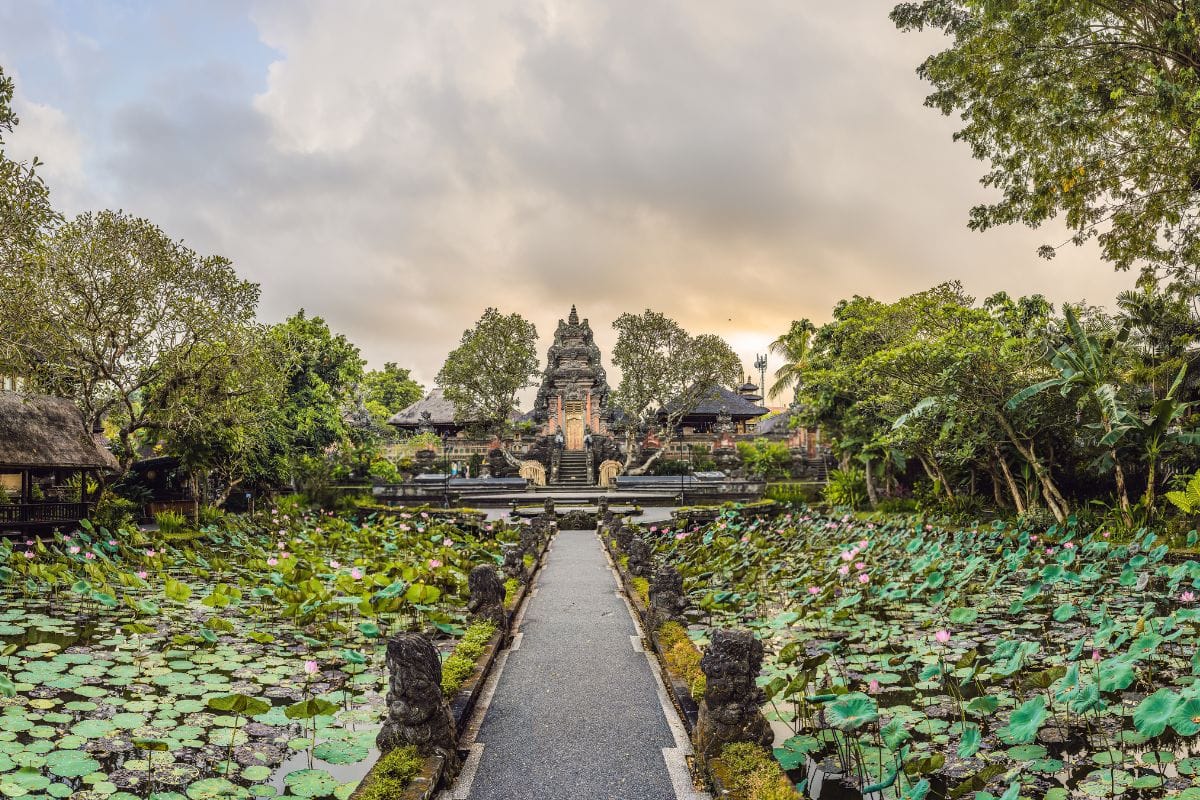
Pura Taman Saraswati
This water temple features lotus ponds and Balinese architecture, offering a quiet environment to visit immediately after the palace grounds.
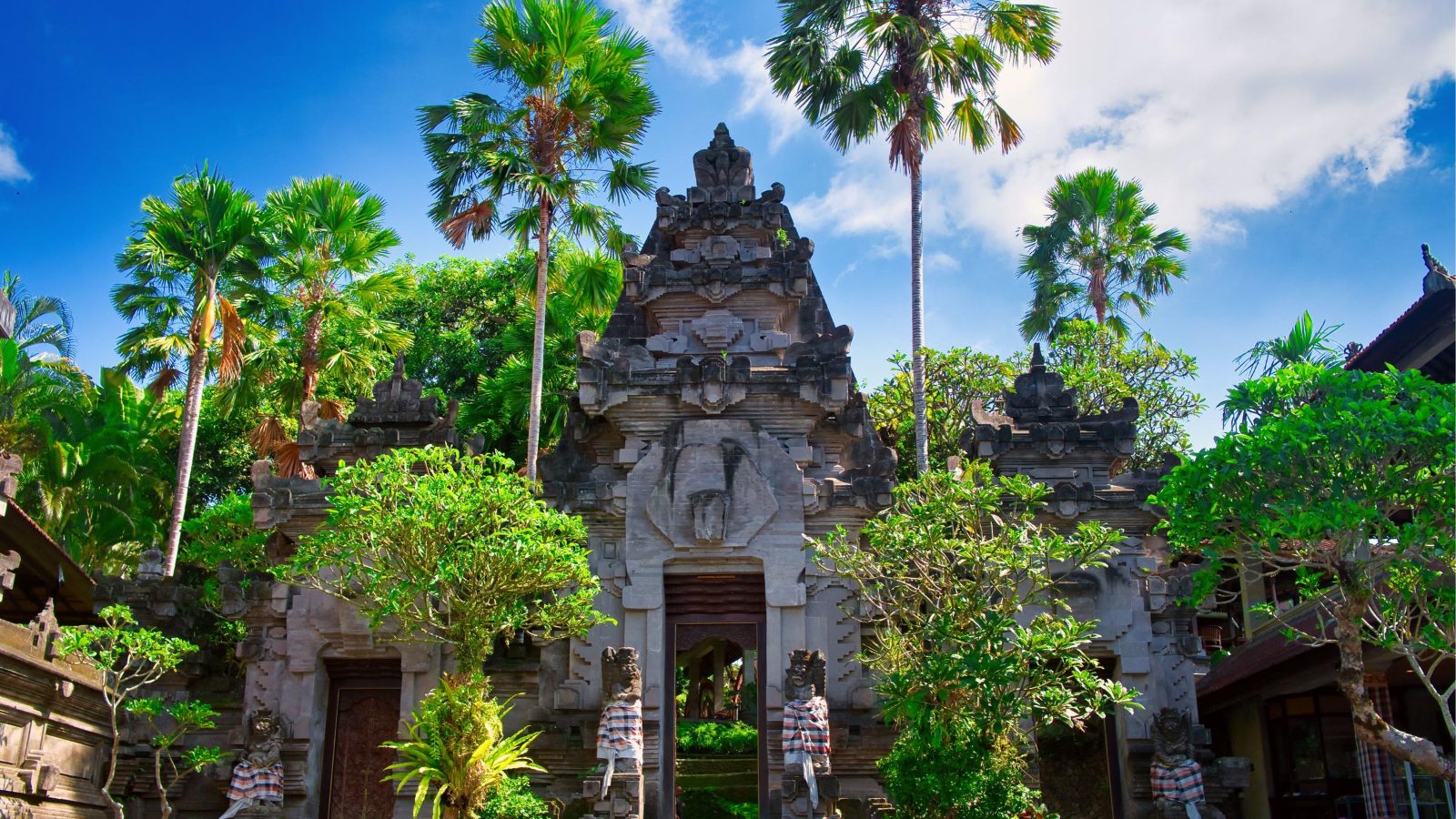
Museum Puri Lukisan
As one of the oldest art museums in Bali, it provides historical context to the artistic traditions seen at the palace.

Campuhan Ridge Walk
This walking trail provides a natural contrast to the town center, accessible from the palace area for those interested in a scenic stroll.
Check availability
Frequently Asked Questions: Is Ubud Worth Visiting
Everything you need to know about is ubud worth visiting